Jim and I are on top of Mt Rufus, at the southern end of the Cradle Mt-Lake St Clair
National Park. It’s one of those blissful, blue-skied, summer days where you
feel you can see the whole of Tasmania; the kind of day that might have you
asking “How often does it get this good?” Except that, had I asked that
question, Jim would have replied “Well, there was yesterday.”
 |
[Tim on Mt Rufus, with Mt Gell behind] |
So how is it that
we’re summiting Rufus two days in a row, and in such amazing conditions? In
part the answer is bushfires; and in part it’s drought, El Nino, and even climate
change. All of those elements have combined to bring us twice to Mt Rufus.
I’ve already
characterised this summer’s bushfires as catastrophic, at least for our rare
highland species (see here) In that context it’s just a minor inconvenience that
our group finds itself at Mt Rufus because fires have closed the track to our
intended destination. As the days of our planned walk in the Central Plateau
drew nearer, the weather remained hot, and Tasmania remained ablaze. Even our
Plan B – a walk in the south-west – was scuttled by closed tracks.
It shows the riches
of bushwalking in Tasmania when a place as beautiful as the 1416m Mt Rufus can be
part of Plan C. Still, why summit twice? Heat comes into it again. Hot February
weather isn’t conducive to steep and steamy adventuring, at least not for me.
Instead we’ve chosen to base ourselves on the side of Mt Rufus, at the Joe
Slatter Hut (more on that here), and do some tamer explorations of
the nearby wilderness.
Yet it isn’t just
about heat. The fires ravaging parts of our wilderness have taken my soul to a
dark place. Good company and good conversation will help that, but so too will
being slow and quiet in the presence of grand vistas and tall trees. But with
wilderness it’s not just about size. I’m also here to seek out some of the
smaller wonders, from delicate wildflowers to intricately eroded rock
formations. And I especially want to see pencil pines, to pay my respects, to
hear their tidings after this most dreadful of summers.
 |
[Tim photographing Fairy's Apron flowers on the Gingerbread Track] |
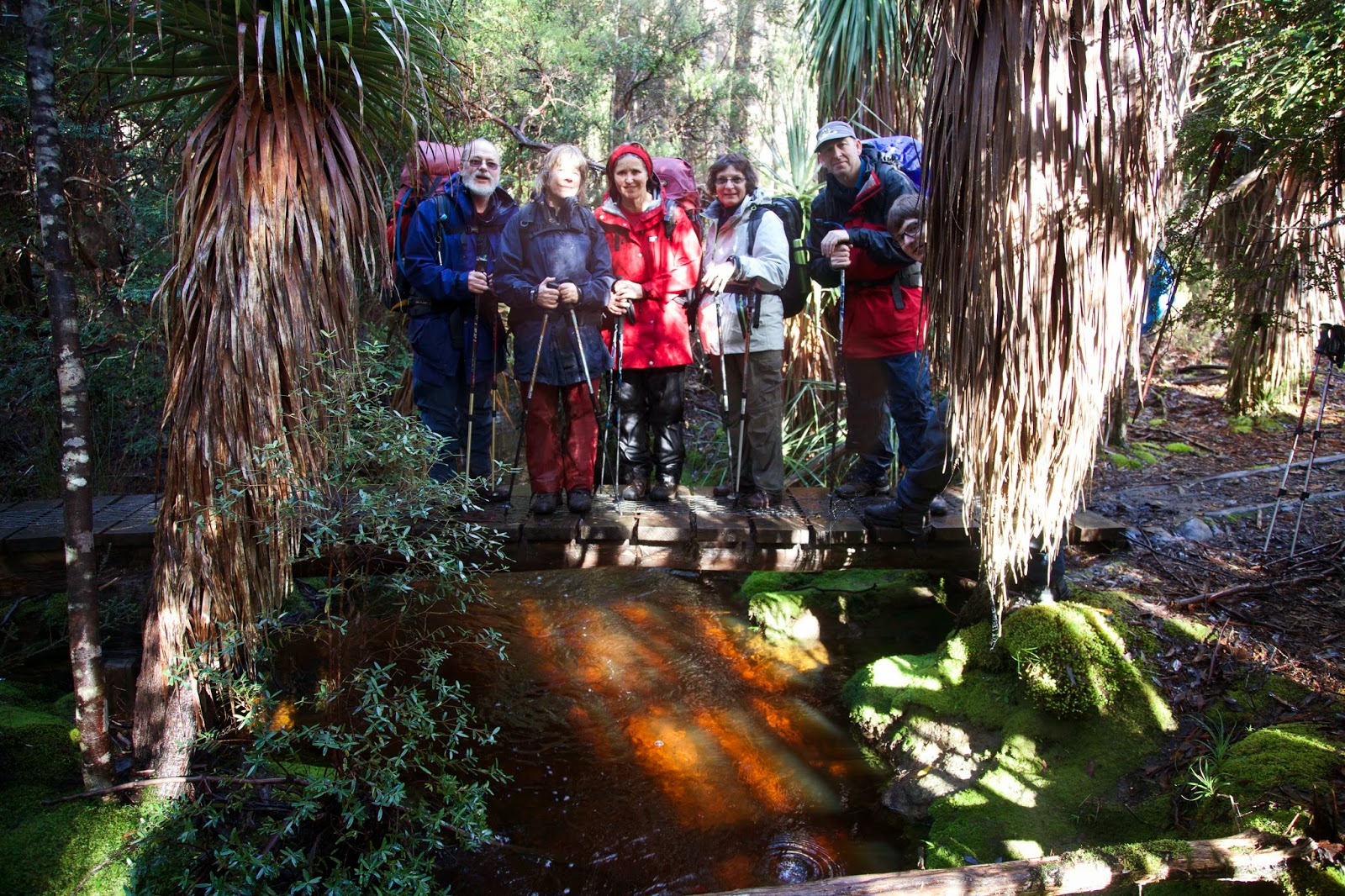
So Jim, Tim, Georgianna
and I trundle up the Gingerbread Track and settle in to Joe Slatter Hut. The
next day is fine and very warm, and we depart slowly, not keen to hurry into the heat. But we’re already hot and sweaty as we reach Gingerbread Hut, a
bit more than half way up Mt Rufus. There Georgianna offers us themed
refreshments: some gingernut snaps to scoff while we cool off inside the quaint
little hut.
 |
[Ginger biscuits at Gingerbread Hut [photo by Jim, courtesy of Georgianna]) |
Before long –
although not without more sweat – we’re on top of Rufus. We’ve come up the route-less-travelled,
but meet “traffic” as we join the main track near the summit. And why wouldn’t
people have made the effort to climb up here from Cynthia Bay – the usual route
– given the extraordinary scenes that the mountain-top affords on a day like
this? To the west are Mt Gell and the Cheyne Range, and in the distance beyond
that the distinctive dome of Frenchmans Cap. To the north, and closer, the
crooked domes of Byron, Cuvier and Gould are the warm-up act for the craggy
bulk of the Du Cane Range. And that in turn resolves into Mt Ossa and the
Pelions, the roof of Tasmania.
Over lunch we share
information and enthusiasm with the other walkers, some from as far away as
France, Italy and Spain. They’ve all seen grander mountains at home, for sure,
but nothing has prepared them for the palpable sense of wilderness here. From
this summit we are not seeing the
likes of roads, buildings, towns, powerlines and cable-cars, which seem to be
the staple of European high places. The walkers’ faces show their appreciation
of the wonder of this place.
 |
[Looking towards the King William Range from the side of Mt Rufus] |
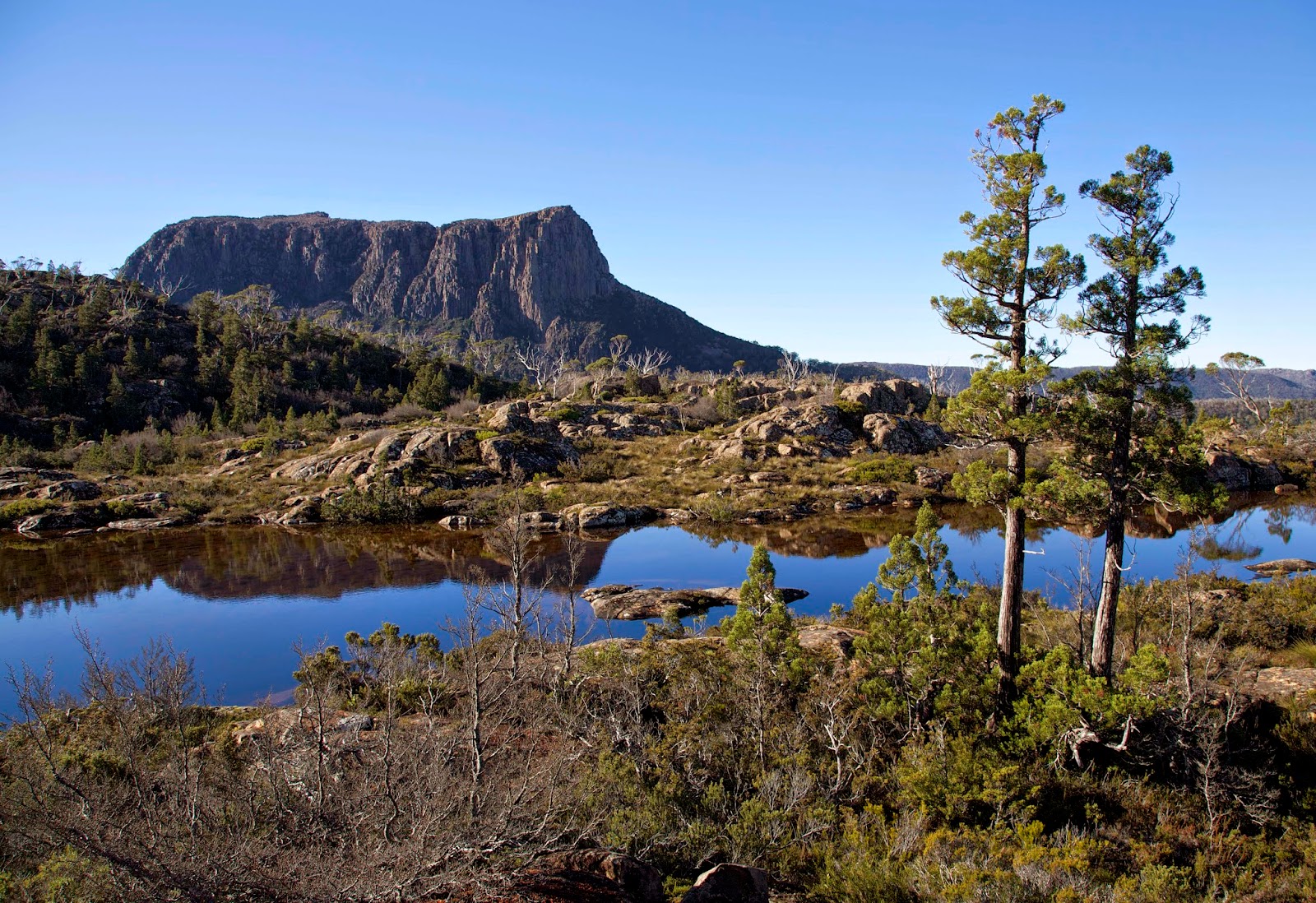
Meanwhile Tim and his
cousin Georgianna are eyeing off our neighbouring mountain, Mt Hugel. It sits on
the other side of an ancient cirque that once fed glacial ice down to
leeawuleena/Lake St Clair, gouging out Forgotten Lake and Shadow Lake in the
process. We’re too late for explorations in the Hugel direction today, but when Tim
starts saying things like “How hard could it be?”, we know an idea has lodged
firmly in his mind.
 |
[Paper daisies on Mt Rufus] |
For now we’re all
content descending in a slow, erratic and mainly off-track fashion. Below the
Gingerbread Hut we find a well-watered clearing that would make a great camping
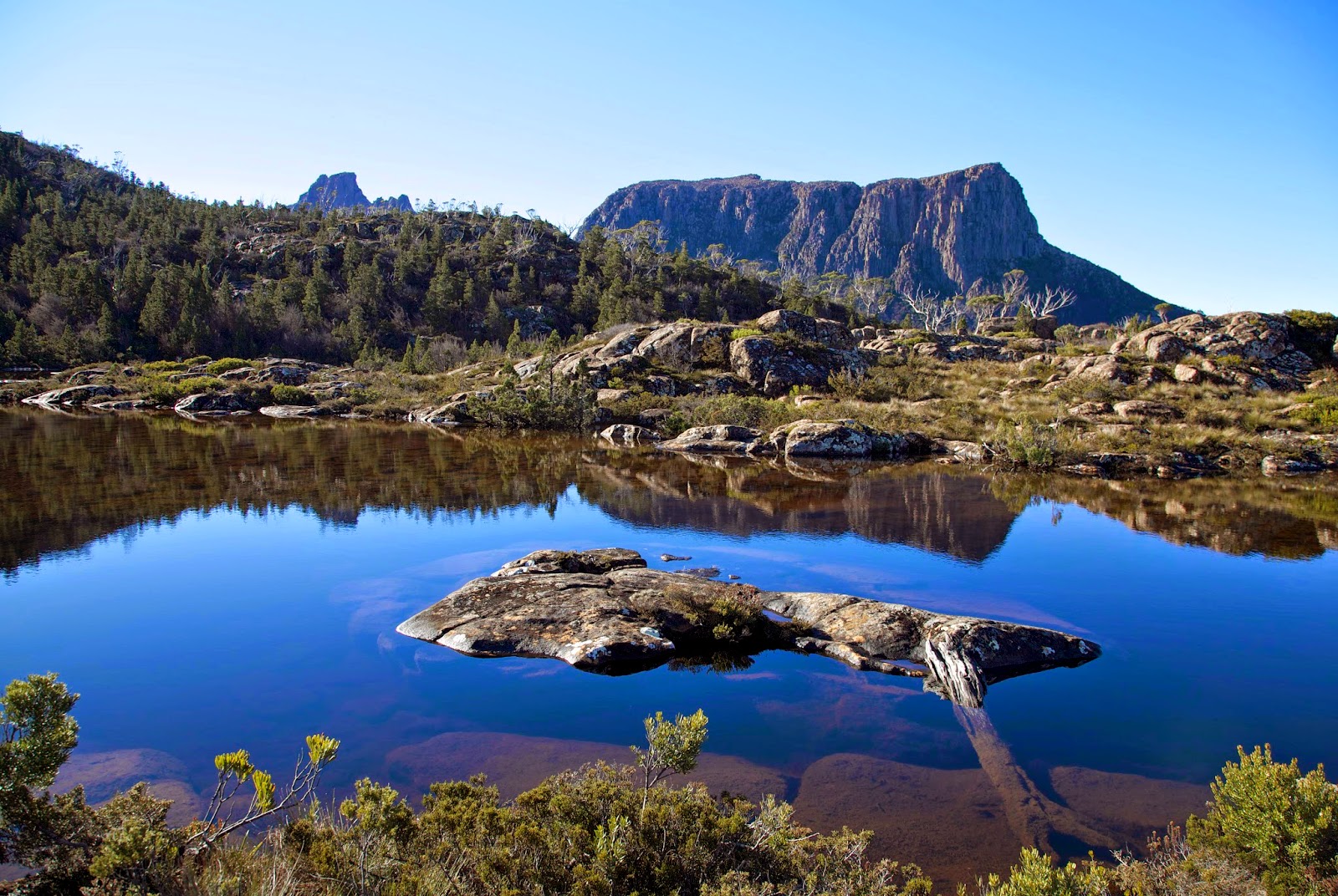
spot, in fair weather at least. A small, sometimes underground creek meanders
through the low bush, finding the occasional pool or mini-tarn to slow its way
down the mountain.
The day has reached
its hottest, and we pause to taste the creek water. If there is any beverage
that can beat the pure cold water of a mountain creek, I’ve yet to taste it.
From there were fan out to explore the scrub, and to wander slowly downwards.
There are patches of scoparia, and a few marshy spots, but we avoid those, and
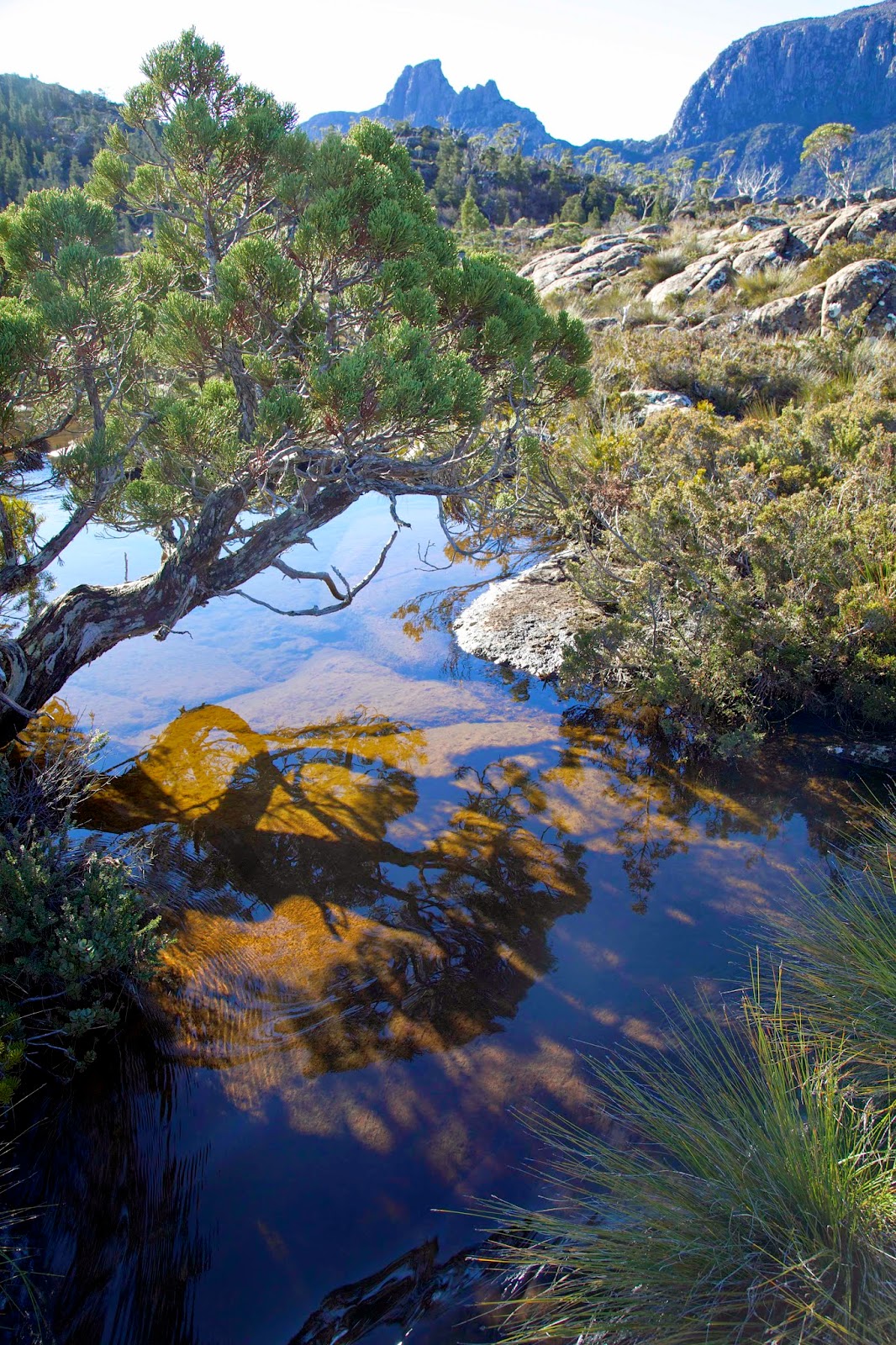
head instead towards a small and lonely-looking stand of pencil pines.
 |
[A small stand of pencil pines near Mt Rufus] |
I push through the scented
foliage into the thick shade of what I assume to be a young stand of trees. But
in the centre I find a gnarled old tree, stooped, forked, but thick with growth.
It must be several hundred years old. I breathe deeply, take in its good air,
and grieve a while for its sibling pines that have gone forever in this summer’s fires.
And then we slowly make
our way back to the hut, stopping for photographs, water and anything else that
takes our fancy. Sometimes it’s good just to amble.