It is a promising
sign when a walk begins with an “I think we’ve died and gone to heaven!” moment. Especially when things haven’t actually
gone according to plan.
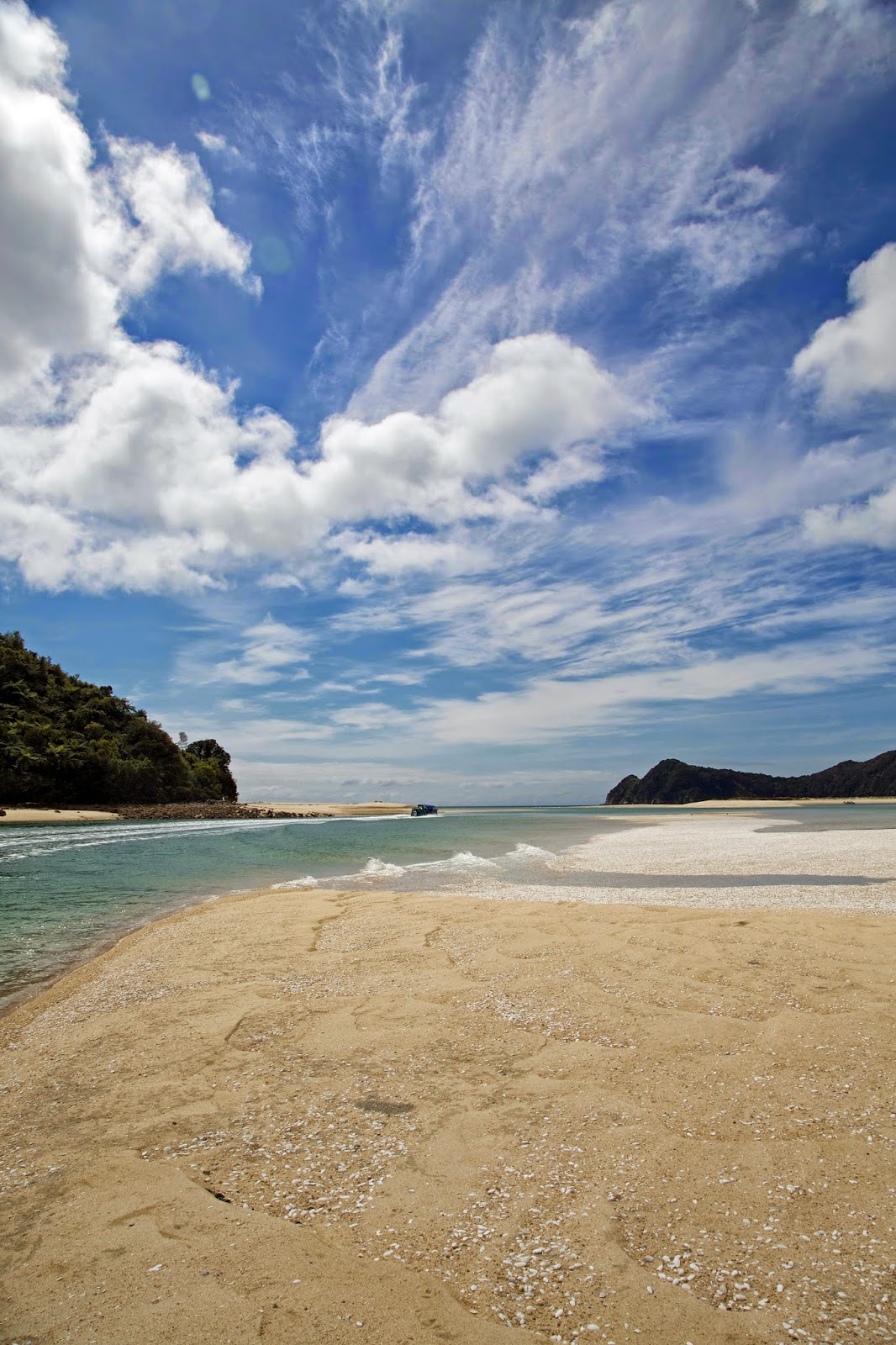 |
[Our water taxi leaves us in "heaven" at Awaroa Inlet] |
We were supposed to
start our walk on New Zealand’s Abel Tasman Coast Track at an inlet called
Totaranui. But we soon learned that in these parts you have to take seriously
the saying “time and tide wait for no man”.
Just before boarding
our water taxi at Marahau in the south of the Abel Tasman National Park, for
our trip to Totaranui in the north, we learned a crucial piece of information
about tides. To walk from Totaranui south to Awaroa, you need to cross the
Awaroa Inlet. We knew that. The hut is on the southern side of the inlet, and you
can only cross it two hours either side of low tide. We knew that too.
What we hadn’t
pieced together was how the actual tide times for that day would affect our
potential crossing times. That particular conjunction of time and tide meant a
crossing at 10 o’clock in the evening. That was an option we quickly ruled out.
But our water taxi skipper had a typically breezy Kiwi solution. He would show
us Totaranui – allowing us a 10 minute stop and look around – before taking us
back to the southern side of Awaroa Inlet.
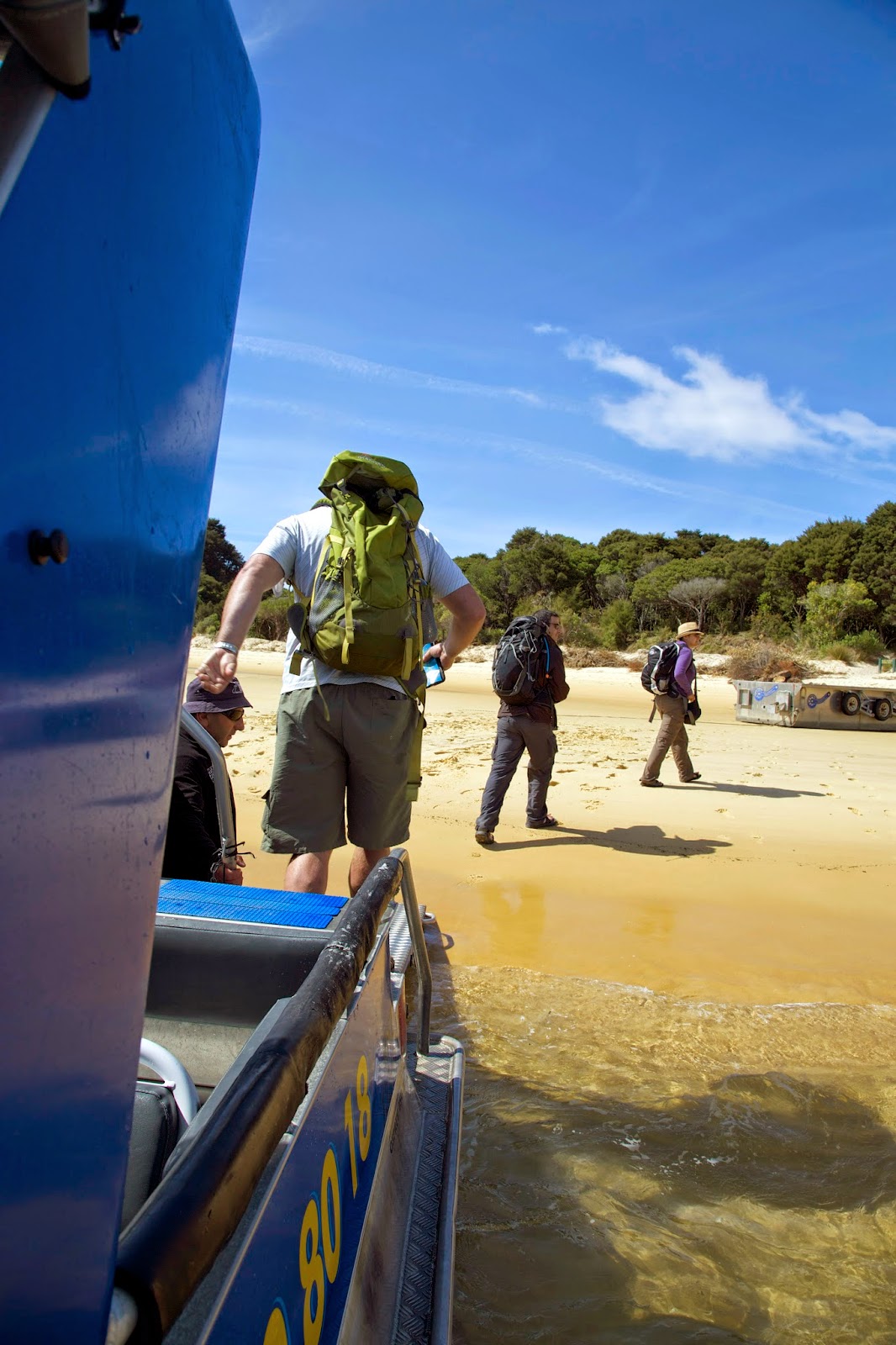 |
[Departing the water taxi at Totaranui] |
And that’s where,
as the burr of the boat’s engine receded and we looked around, we started to
think of heaven. Instead of a long afternoon’s walk and a dangerous swim/wade,
we had the rest of the day to settle into both the hut and the tranquility.
We had read that
Awaroa was one of the few places on this bit of coast on which Maori people had
a permanent pre-European settlement. Around the well-watered flats they could
plant crops of kumara to supplement the rich marine and forest resources of the
area.
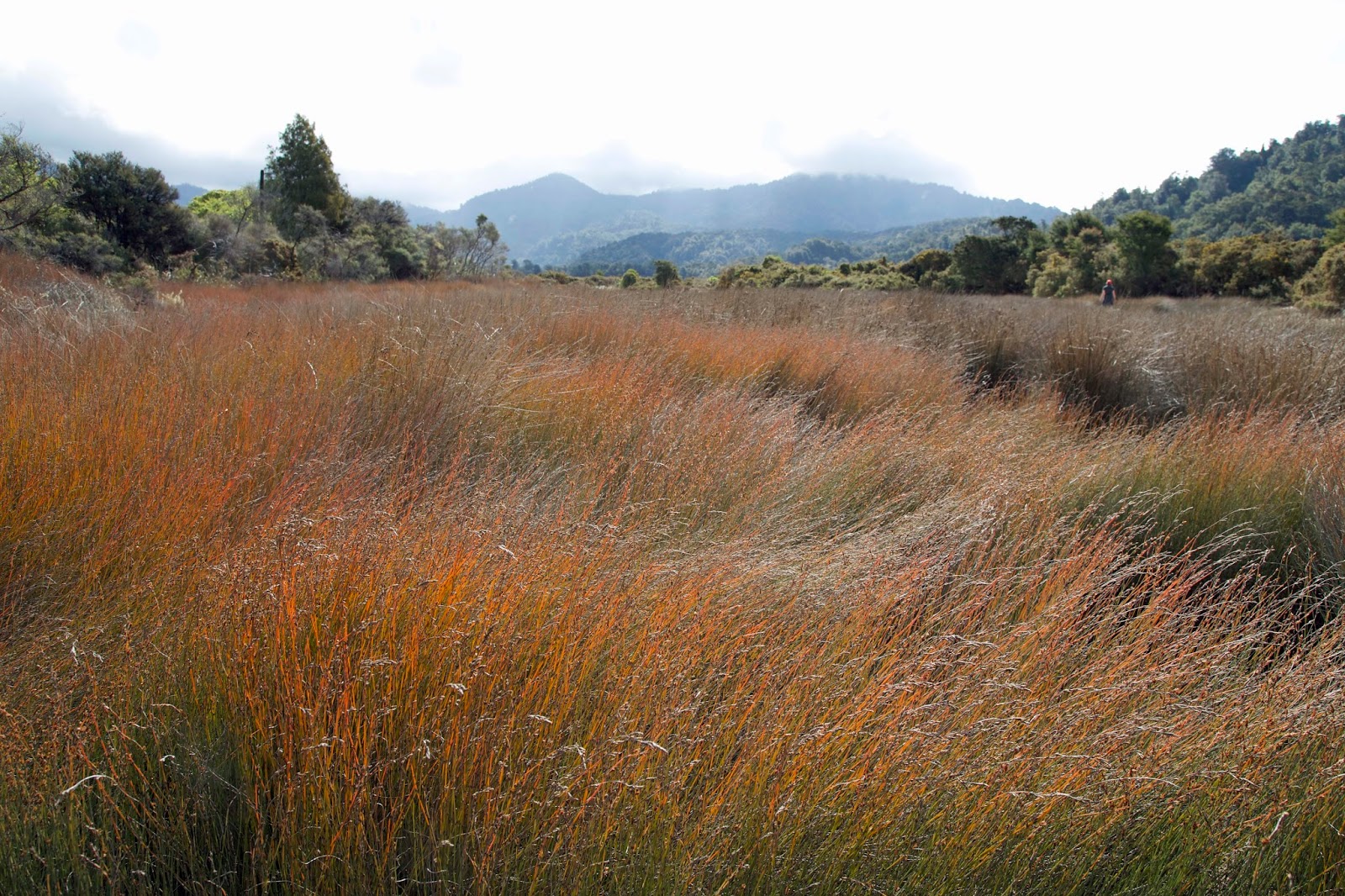 |
[Reeds on the flats at Awaroa Inlet] |
Dutch explorer Abel
Tasman landed near here in 1642, shortly after his “discovery” of the island he
named Van Diemen’s Land. Eventually both that Australian island (in 1856) and
this national park (in 1942) would bear his name, as would the sea between Australia
and New Zealand.
We were joined in
the hut by three young trampers from Christchurch, all I.T. workers taking a few
days off to recharge their batteries. The DoC hut ranger was the only other
person we saw at the hut. This was a little unexpected, given that this is
supposed to be New Zealand’s most popular “Great Walk”. Perhaps mid-October was
early in the season; or did the locals know something in the weather forecast
that we didn’t?
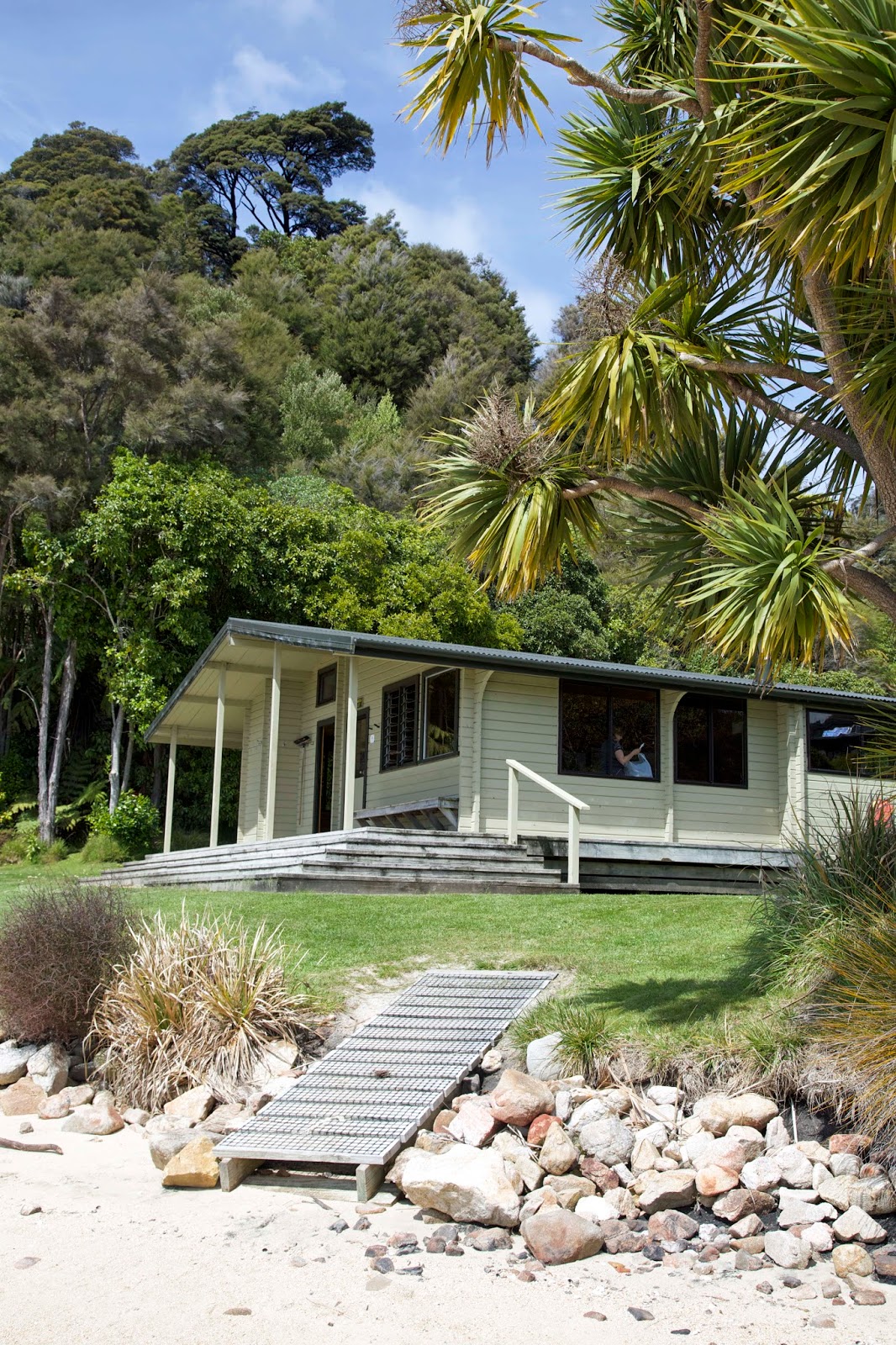 |
[The DoC hut at Awaroa] |
From the hut ranger
we learned that there was a lodge about 40 minutes walk away, and that you
could buy "proper" coffee and even a meal there. We long ago learned not to be surprised
by what’s on offer on New Zealand walks. And not being at all averse to luxuries
on a walk, we decided to see for ourselves.
After maybe 15 or
20 minutes we came to a building with a couple of ambiguous signs, none of
which indicated it was the lodge. It certainly didn’t look open for business,
but I wandered up for a look anyway. As I peered in a window, a man came out to
chat. He was an electrical contractor doing a bit of work. He assured me that
it was the lodge, but that no-one was around. There wouldn’t be any coffee, at
least not from that source. Too early in the season again, perhaps?
We explored the
picturesque inlet for a while, taking time to watch a pair of variable
oystercatchers (Haematopus unicolor) as they strutted in unison along the strand. Their Maori name is torea-pango, and they're also known in New Zealand as red
bills. We found them remarkably like Australia’s sooty oystercatchers, except for
the variability in their plumage (which isn't always black) and their pink rather than red
legs. Also our “sooties" frequent rocky shores, whereas these appeared happy on sandy
shores.
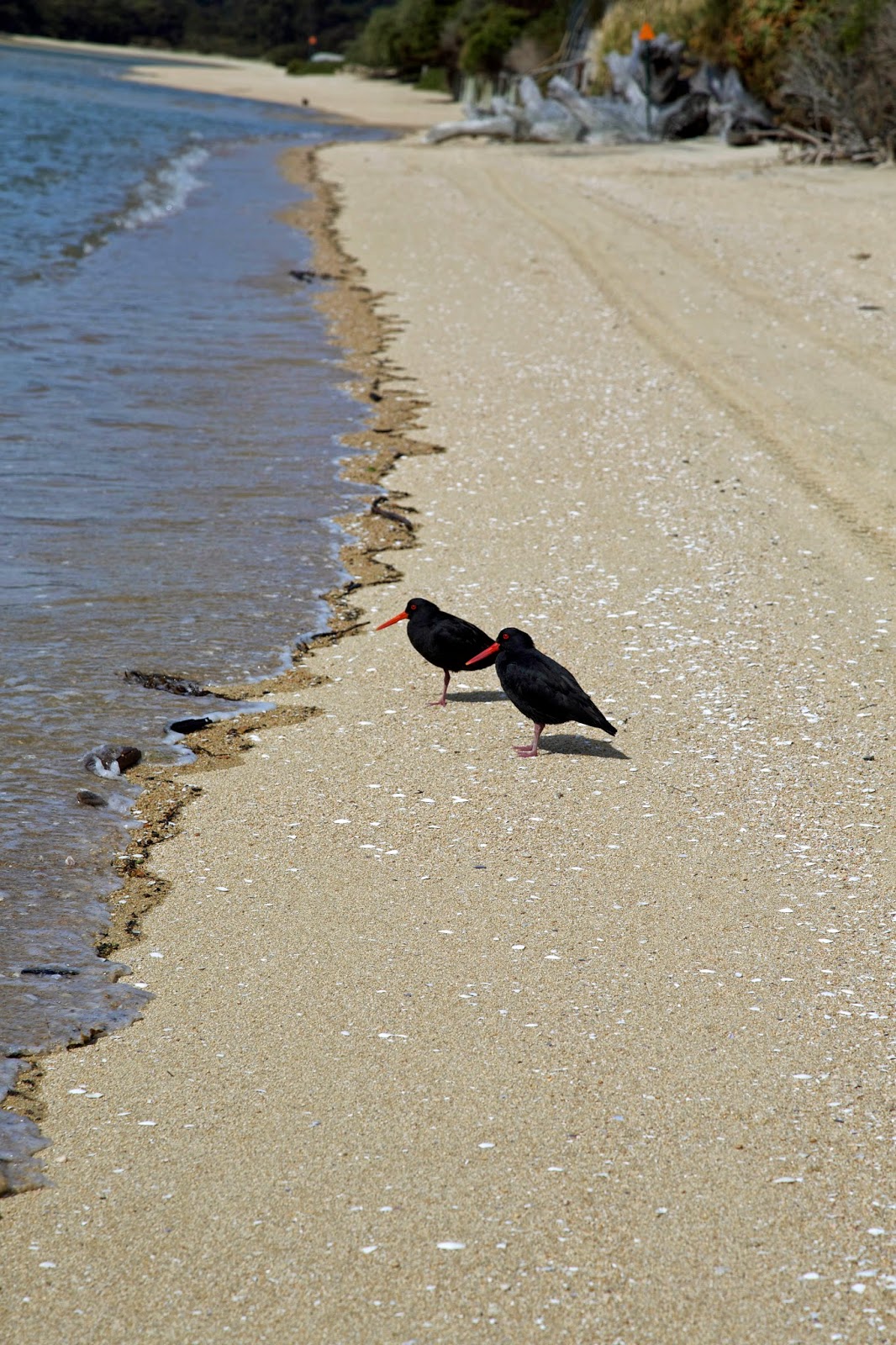 |
[A pair of variable Oystercatchers at Awaroa] |
While it wasn’t anything like a long walk with a full pack, our small expedition in the tangy sea air was enough to work
up an appetite. Back at the hut we broke out the cheese, biscuits and wine (refer to my mention of
“luxuries” above), before getting on with dinner (only a freeze-dried, I'm afraid, but washed down with a little more wine). Our
Christchurch hut mates had gone off to make a fire pit on the beach, but with
clouds threatening and the wind getting up, we decided against joining them. Frankly, whether we'd earned it or not, we
were more than happy to head for our bunks for an early night.


