Need I say it’s not
about the bike? A bike is a means of conveyance, albeit a particularly
convivial one for open air travel. But nor is it all about the trail. That is
just a path along which to travel; a ribbon draped – cunningly at times –
across a landscape.
Yet to say it’s
about the landscape is simplistic too; misleading even. Central Otago’s landscape
is vast and powerful, filled with such grand wonders as snowy mountains and
sinuous, willow-fringed rivers. At the same time it also manages to be intimate,
with all those tiny tail-wiggling lambs, for instance. They’re a hint that Otago
is rich with the stories of human endeavour and what people have done and
continue to do within the landscape. It's the sum of all these that somehow invites you in; makes
you want to look more closely.
So at the end of
each day’s ride – and let’s be honest, most were only half day rides – we
always found something more to see; to do; to uncover. In fact on day one, even
before we set bottom on bike, the tone was set by the breakfast stories of our
host, John, at Dunstan House in Clyde. As we sat there in our strangely
coloured cycling gear, feeling anxious and ill at ease about the challenges
ahead, his stories made us feel kin to an array of weird and wonderful
characters who had spent time in these parts.
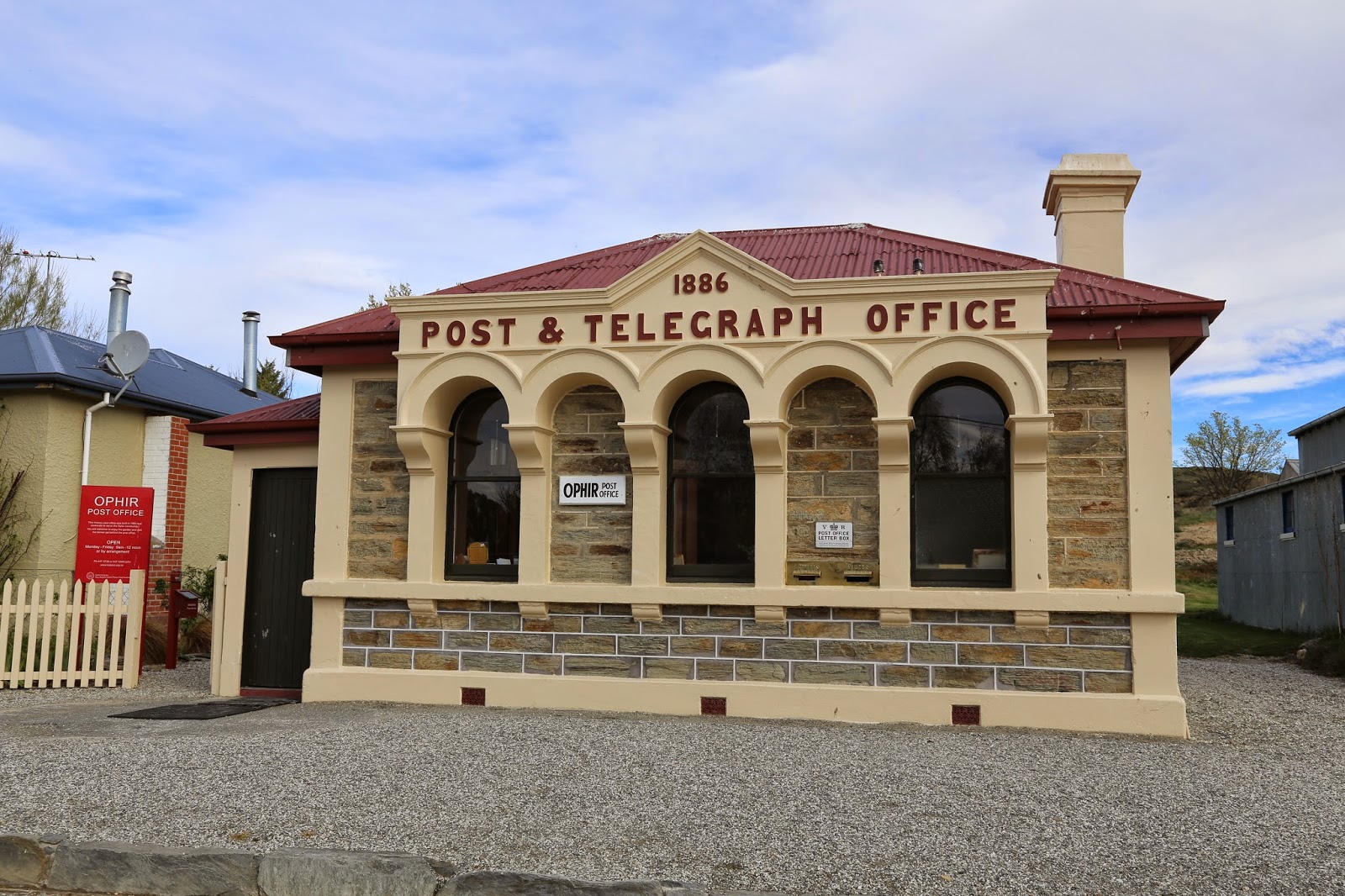 |
[Ophir's Post Office] |
Many of the stories
we heard and saw would have gold at their heart. An example came after day
one’s ride. Downing our bikes at Omakau, we set off to explore Ophir, an
extraordinarily intact former gold mining town. Its buildings and bridge were
indicative of those richer origins. Its ossification was due to the demise of
gold, as well as it being by-passed by the railway in 1904. That side-lined
status might have been reinforced by it also being by-passed by the rail trail.
But all that neglect has had a benign effect. Few 150 year-old towns are as
well-preserved as Ophir, and now it’s an attraction in its own right.
 |
[The historic stone bridge at Ophir] |
At Oturehua, the
end of our second day’s ride, we were met by Sam, a local farmer turned guide.
He took us in his people mover to more side-stories with a gilt edge. St
Bathans and Cambrian were both founded during the gold rush of the 1860s. In St
Bathans the evidence of that could clearly seen in the Blue Lake, a vast hole
created by gold diggers and now filled with water. We paused for a drink at another
watering hole, the marvellous Vulcan Hotel: a pub that could tell a few tales.
 |
[The Blue Lake at St Bathans] |
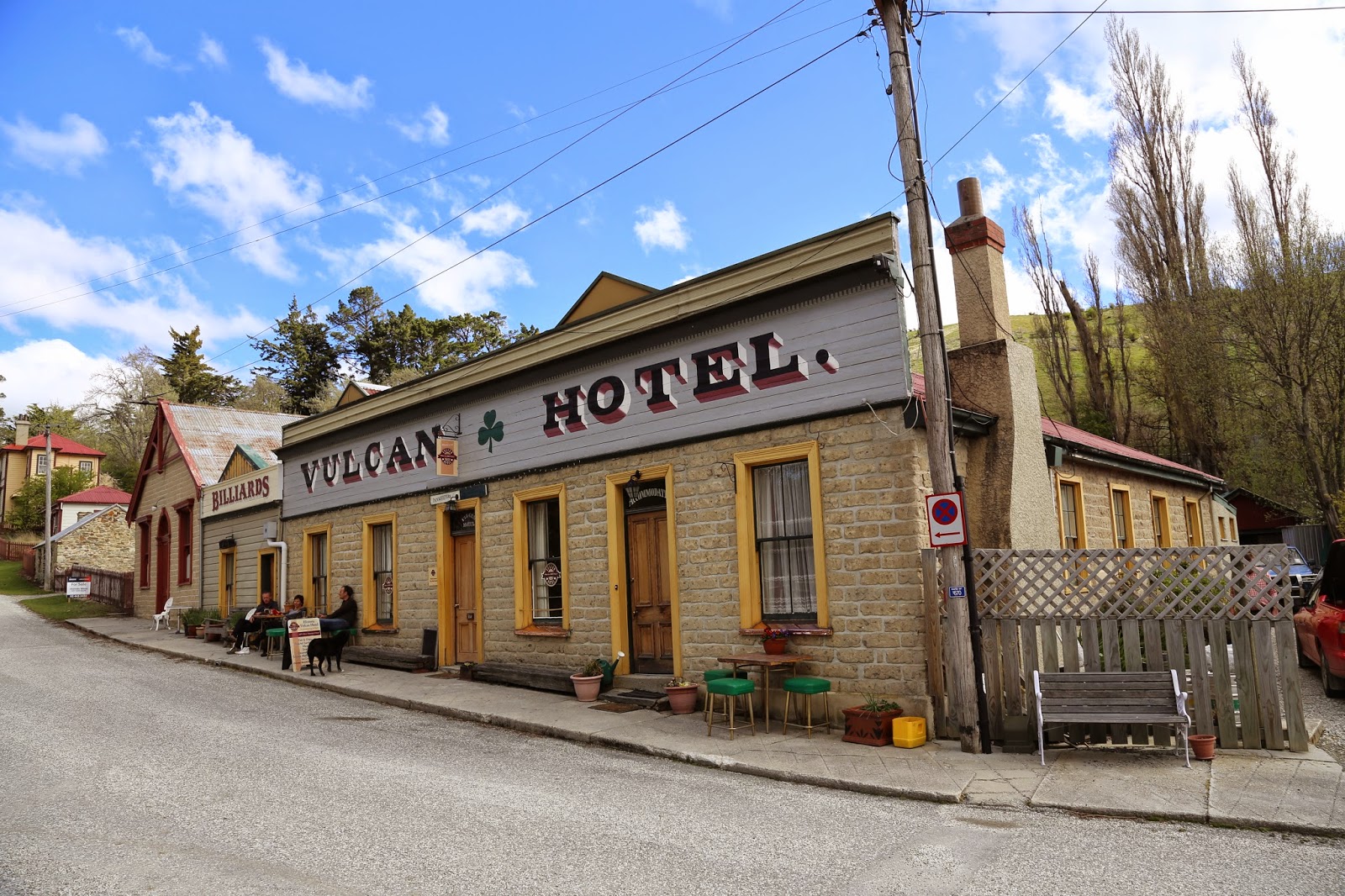 |
[The Vulcan Hotel, St Bathans] |
The history at
Cambrian, a little further down the already seldom-trod path, was partly delivered
first-hand, when Sam introduced us to Bob. This lucid and pleasantly eccentric
character was very keen to show our party his domain, which includes the
Cambrian Common Forest.
 |
[Bob entertains guest at his Cambrian property] |
 |
[Part of the Cambrian Common Forest] |
Bob began planting a forest/garden there in the year
2000, and already its thousands of trees and other plants have become hugely
impressive. The town’s larger past – there are now only a dozen or less
residents – was evident in the old school house and the remains of many other
buildings.
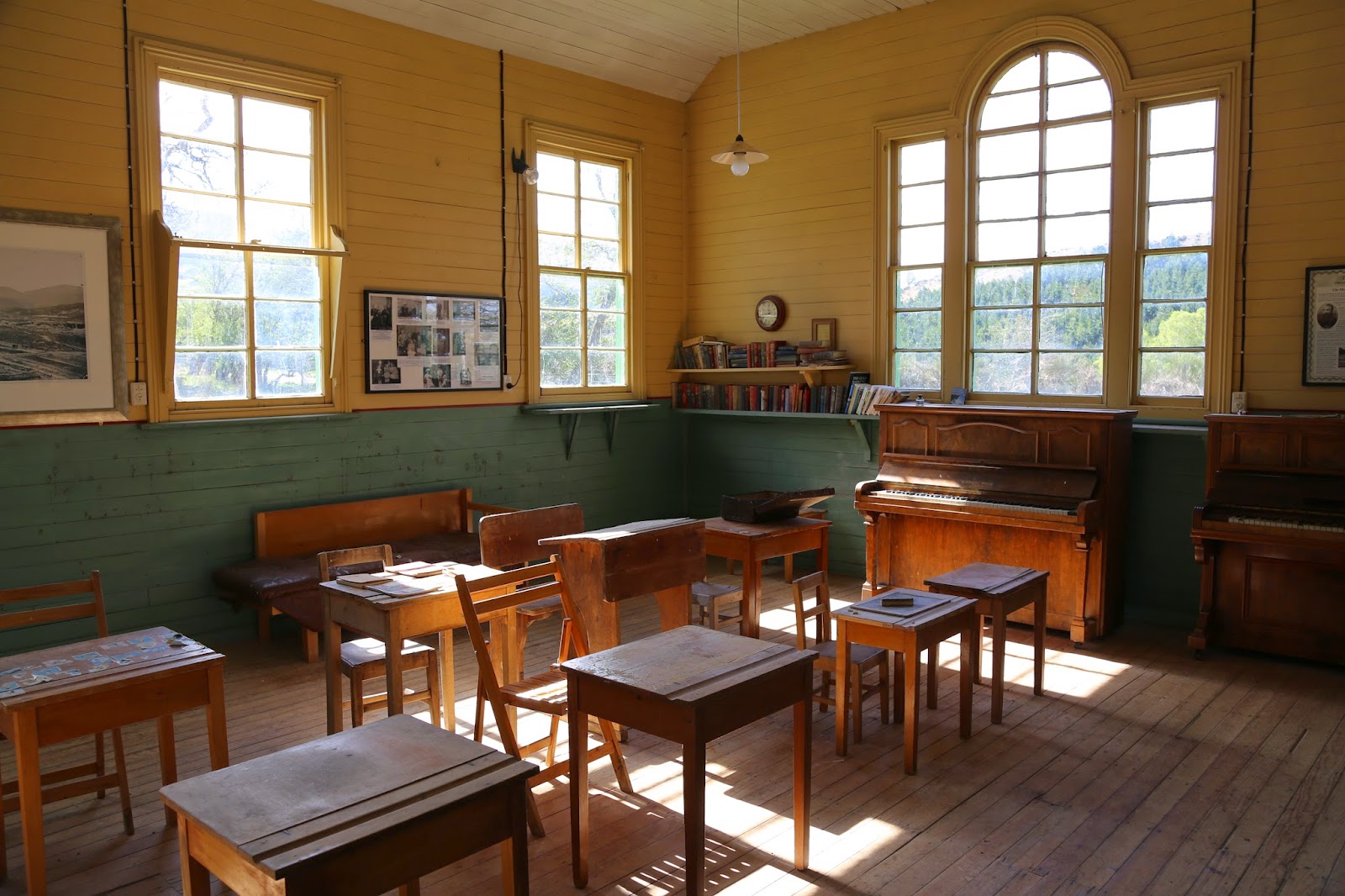 |
[Inside the old Cambrian School] |
Our own
eccentricities were challenged at the end of the next day, when we were taken
from Ranfurly to Naseby for an afternoon of curling. I confessed to my brother
that this ancient Scottish game, a kind of lawn bowls on ice, sounded as
appealing to me as synchronised swimming. An hour later I was totally repentant,
and by the end of our session I was begging for more time to perfect my
technique.
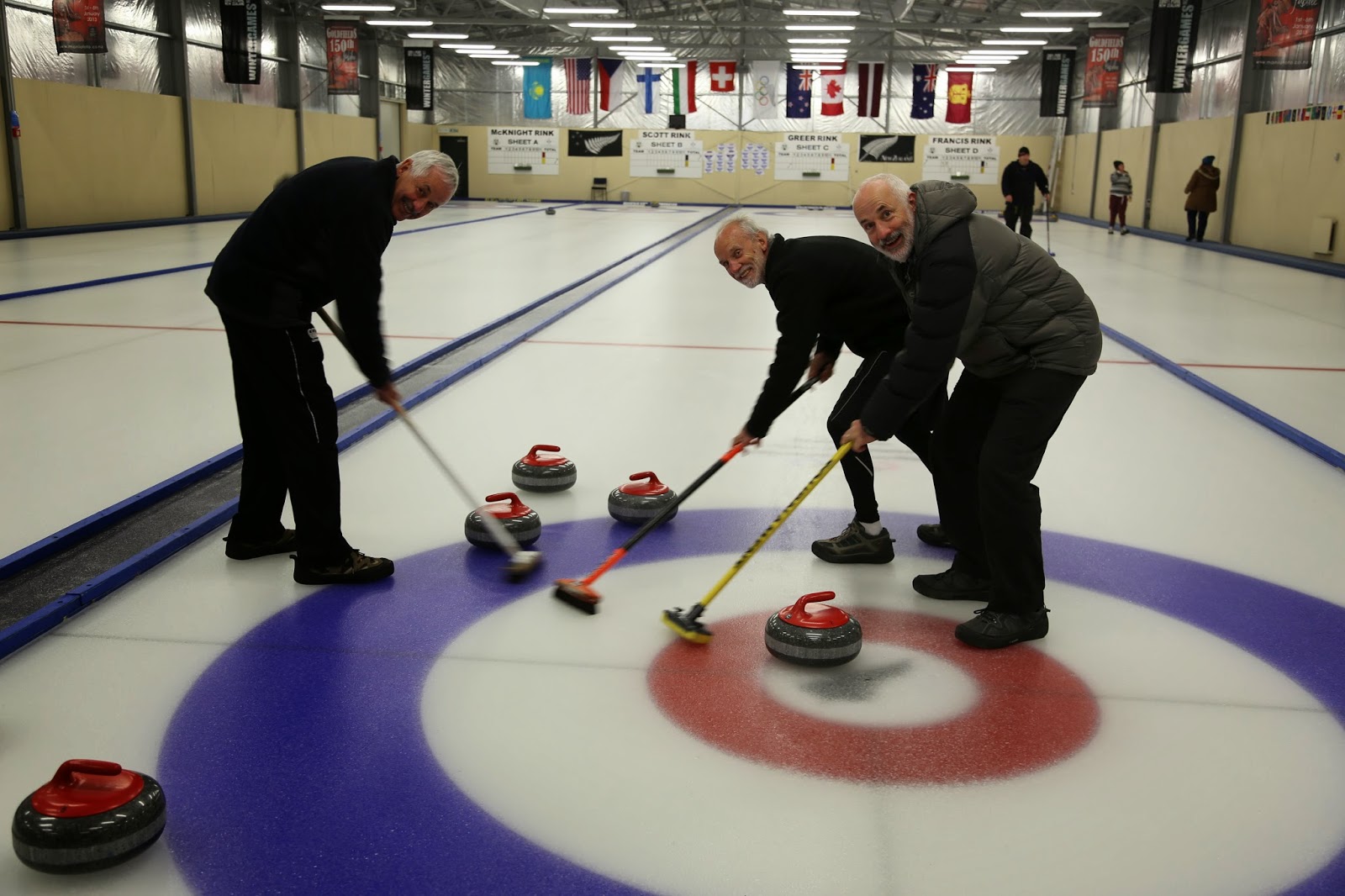 |
[The boys practise their curling at the Naseby Indoor Rink] |
I’ll spare you the
details of what’s involved in the game, but suffice to say it is a “must do” if
ever you get the chance. I’ll add just one note, and that is that the game is
competitive, and that sibling rivalry lives on in my family! Fortunately we
contrived an honourable draw, rescuing dinner that night from any incivility.
Our final night, at
the Otago Central Hotel in Hyde, proved another highlight. Our host Ngaire not
only cooked a three course meal for us, but gave us a spirited recital of her
party piece, a poem called The Rail Trail
Tale. Without giving too much away, I can tell you it involved cyclists, a
car key and a long drop toilet. At the end of four days riding, and on a day
which saw our support car break down, I can report that laughter was a good
medicine.
At first it may
seem odd to end a post called “Off the Rails” by boarding a train, but our
final act on the Otago Central Rail Trail was to join the Taieri Gorge Railway
at Middlemarch. And rather than odd, it seemed fitting to travel via the mode
of transport that led to this trail ever happening in the first place. If we ogled
at the view partly from a cyclist’s viewpoint, dreaming of how spectacular it
would be to ride that final section down to Dunedin, we were more than happy to
be travelling under someone else’s steam.
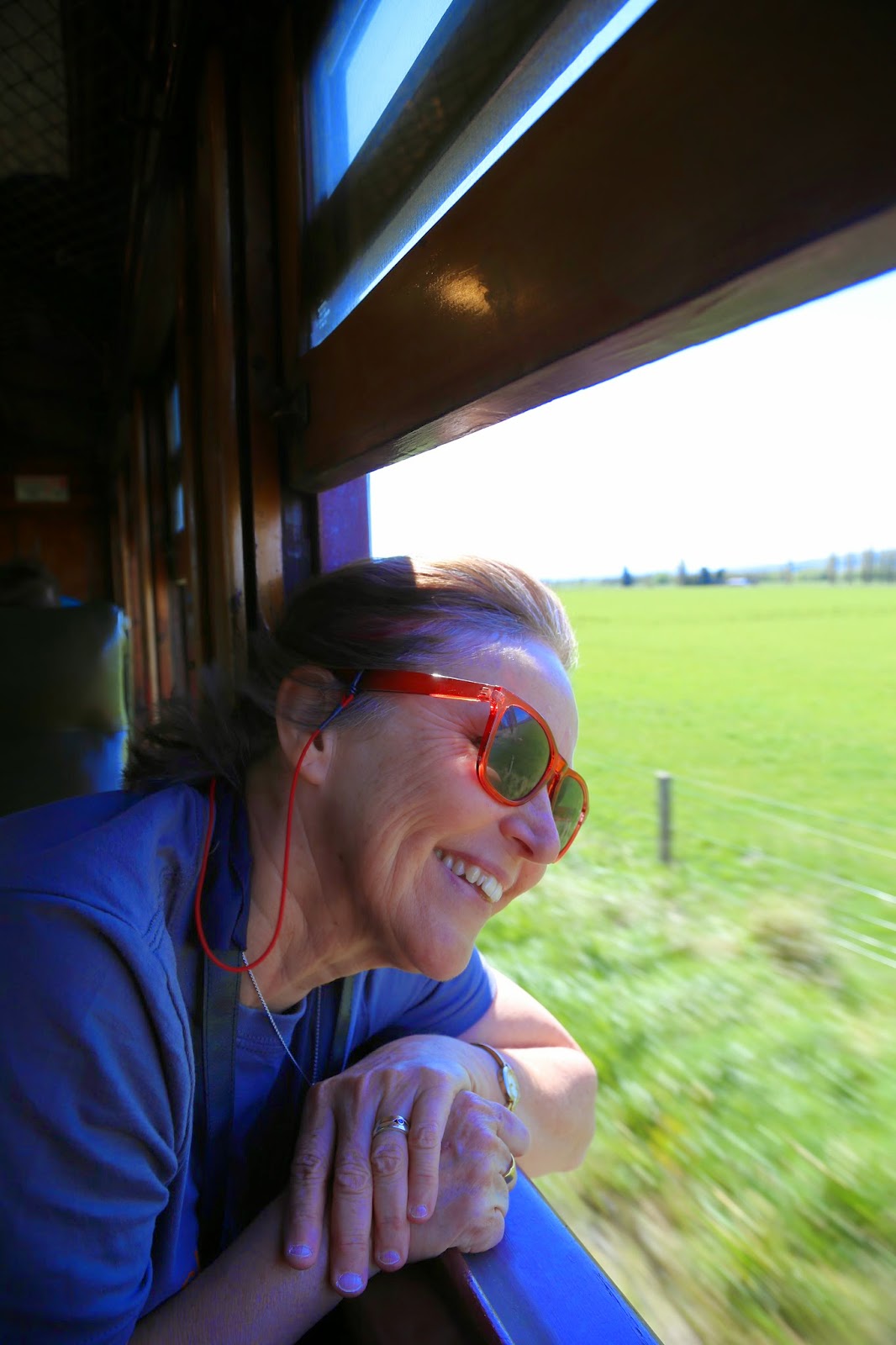 |
[A happy conclusion: aboard the Taieri Railway] |


